

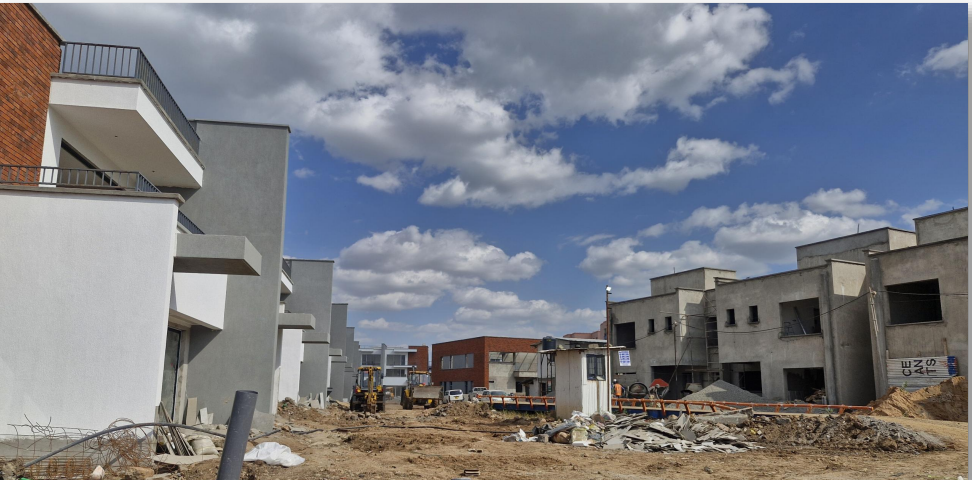
Homeownership, Marigold II
Kenya’s residential property market is evolving.
For decades, buying a home was primarily about ownership. Today, buyers are asking a different question:
What kind of lifestyle will this investment create?
This shift reflects changing priorities among homeowners and investors. Property is no longer evaluated solely by its size or location. Increasingly, buyers are looking at the complete living experience and the long-term value a development can deliver.
The future of homeownership is moving beyond houses. It is moving towards communities.
A New Generation of Homebuyers.
Modern homebuyers are making more informed decisions than ever before.
They are evaluating accessibility, infrastructure, security, sustainability and convenience alongside traditional considerations such as design and pricing.
As hybrid working models, changing family dynamics and urban expansion continue to reshape Nairobi, developments that support everyday living are becoming increasingly attractive.
Today’s investment is not simply about where people live.
It is about how they live.
Location Still Matters; But Accessibility Matters More.
Location has always been one of the strongest drivers of property value.
However, accessibility is becoming equally important.
Homeowners increasingly prefer developments that connect them efficiently to workplaces, schools, healthcare facilities, shopping centres and transport corridors.
Reducing commuting time improves productivity, enhances quality of life and contributes to long-term property desirability.
This makes strategically located developments more resilient over time.
Infrastructure Is Becoming a Competitive Advantage.
Reliable infrastructure is no longer considered a luxury.
It has become an expectation.
Consistent water supply, backup power, efficient heating systems, integrated security and well-maintained communal spaces contribute directly to homeowner satisfaction.
These features also protect long-term property value by creating environments where residents can live comfortably despite changing urban demands.
Developments that invest in resilient infrastructure are increasingly positioned to remain competitive for years to come.
Communities Create Lasting Value.
Perhaps the biggest shift in Kenya’s residential market is the growing appreciation for community living.
Modern developments are designed to offer more than individual homes.
They bring together recreational spaces, wellness facilities, landscaped environments and shared amenities that encourage interaction while improving everyday experiences.
These elements strengthen neighbourhood identity and create places where families can establish lasting roots.
Ultimately, buyers are investing in a community as much as they are investing in a home.
Reflecting the Changing Market.
This evolution is reflected in developments such as Marigold II, which has been planned around the principles of accessibility, convenience and integrated community living.
Located along Langata Link Road opposite Wilson Airport, the development comprises 89 four-bedroom townhouses within a secure gated community. It incorporates a clubhouse, gym, swimming pool, backup power, borehole and council water supply, solar street lighting, heat-pump water heating systems and comprehensive security features. As of June 2026, the project was 83% complete, with the show house already complete ahead of the targeted September 2026 completion.
These features demonstrate how residential developments are responding to the changing expectations of modern homeowners while supporting long-term investment value.
Looking Ahead.
Kenya’s housing market will continue to evolve as cities expand and buyer expectations become more sophisticated.
The developments that stand out will not simply be those with impressive architecture.
They will be those that successfully combine thoughtful planning, strategic locations, resilient infrastructure and community-centred living.
For developers, the opportunity extends beyond building homes.
It lies in creating environments where people can live, grow and invest with confidence.
That is the future of homeownership.