


Serene Park
Kenya’s investment landscape is transforming. Investors are abandoning speculative opportunities driven by hype, rapid currency movements, or unrealistic returns. They now demand stability, income generation, and long-term value preservation.
This shift comes as Kenya’s broader economy experiences relative macroeconomic stability. Inflation eased to approximately 4–5% in early 2026, while the Kenyan shilling remained relatively stable against the US dollar compared to the sharp volatility experienced in 2023 and early 2024.
The stability is undeniably positive. A predictable exchange rate empowers businesses to forecast costs, stabilizes import pricing, and fortifies investor confidence. Developers gain because imported construction materials and financing obligations are easier to manage.
However, the same stability has also reduced the aggressive short-term gains some investors previously enjoyed during periods of sharp currency depreciation and high interest rates.
For years, investors benefited from high-yield treasury products, forex fluctuations, and inflation-driven returns. Today, those rapid gains are becoming less predictable. Consequently, investors are becoming more selective about where they place capital.
MMFs and Bonds Still Offer Stability, But Returns Are Shifting.
Over the past two years, Money Market Funds (MMFs) and government securities attracted significant investor attention across Kenya.
MMFs remain attractive because they offer:
- Lower volatility
- Easier access to funds
- Daily interest accrual
- Relatively stable short-term returns
Similarly, treasury bills and government bonds continue attracting investors seeking government-backed income and predictable returns.
However, as inflation and interest rates gradually stabilize, yields on treasury bills have also moderated from the unusually high levels experienced during periods of economic pressure in 2023 and 2024.
Consequently, some investors are now reassessing whether fixed-income products alone can deliver strong long-term wealth growth.
History also continues to shape investor behavior.
During the 2008 global financial crisis, Kenya experienced slower economic growth, reduced foreign investment inflows, higher inflationary pressure, and weakened investor confidence. Although government securities remained safer than speculative investments, inflation and economic uncertainty still affected purchasing power and the real value of returns.
This remains an important lesson for investors today. Fixed-income investments may preserve capital during uncertain periods, but inflation can gradually reduce the actual long-term value of those returns.
As a result, many long-term investors continue balancing financial instruments with tangible assets such as property.
Why Property Continues Standing Out.
Unlike short-term financial instruments, property combines both income generation and long-term asset appreciation.
Real estate continues to offer investors:
- Rental income
- Capital growth
- Inflation protection
- Tangible ownership
- Long-term wealth preservation
Historically, property markets tend to recover over time because demand for housing, logistics space, offices, and commercial infrastructure continues regardless of economic cycles.
The COVID-19 pandemic, for example, reshaped how investors evaluate risk and stability.
During the pandemic, several sectors experienced major disruptions as businesses closed, consumer spending slowed, and economic uncertainty increased globally. Kenya’s property market also faced pressure, particularly within hospitality and some office developments.
However, the pandemic revealed an important distinction within real estate itself.
Sectors supported by long-term demand fundamentals, particularly logistics, warehousing, and well-planned residential communities, demonstrated resilience and recovered faster as economies reopened.
At the same time, demand for space, accessibility, infrastructure, and controlled living environments became more important to both businesses and homeowners.
The pandemic also accelerated:
- E-commerce growth
- Demand for warehousing
- Satellite-town living
- Mixed-use developments
- Infrastructure-focused investment
Consequently, many investors began shifting away from purely speculative projects and toward developments capable of delivering long-term operational value and stability during uncertain economic periods.
Today, that mindset continues shaping investment decisions across Kenya’s evolving property market.
The Finance Bill 2026 Is Also Influencing Investor Decisions.
Ongoing discussions around the proposed Finance Bill 2026 continue shaping investor sentiment across several sectors.
Businesses and investors remain cautious about:
- New taxation proposals
- Compliance obligations
- Operational costs
- Future economic policy shifts
Recent proposals targeting rental income taxation and expanded compliance measures have increased conversations around structured investing and long-term financial planning.
As a result, developments supported by strong infrastructure, strategic planning, and predictable income potential attracted stronger market confidence.
Speculation Is Losing Ground.
Kenya’s property market is becoming more disciplined.
In previous years, speculative developments often attracted investors largely on project growth and aggressive marketing.
Today, investors ask more practical questions:
- Is the project deliverable?
- Is the infrastructure complete?
- Does the location support demand?
- Can the property generate sustainable income?
- Is the developer credible?
Consequently, the market is shifting away from speculation and toward execution, governance, and long-term operational value.
Kilimani, South B, and South C Reflect the Risks of Over-Speculation.
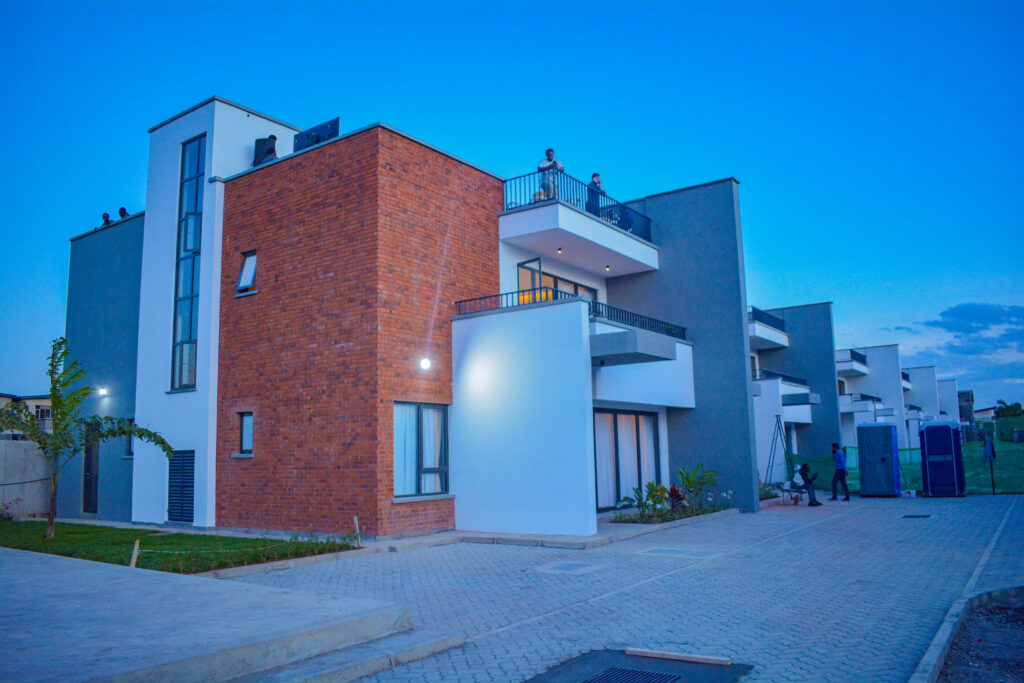
Marigold II.
Neighbourhoods such as Kilimani, South B, and South C increasingly reflect how aggressive speculative development can reshape urban real estate markets over time.
Over the past decade, these areas experienced rapid apartment expansion driven by investor demand, urban population growth, and expectations of strong rental returns. Developers moved aggressively into these locations due to their proximity to Nairobi’s CBD, transport access, and established residential appeal.
However, the pace of development eventually created new pressures.
Today, conversations around congestion, infrastructure strain, parking shortages, traffic, and declining exclusivity continue shaping investor sentiment.
At the same time, increased apartment supply has intensified competition among landlords, placing pressure on rental yields within certain developments.
This does not diminish the strategic importance of Kilimani, South B, or South C. Instead, these areas highlight an important lesson within Kenya’s evolving property market: long-term sustainability matters just as much as location.
Consequently, investors are increasingly shifting attention toward developments supported by:
- Controlled density
- Better infrastructure planning
- Accessibility
- Lifestyle convenience
- Long-term liveability
This shift partly explains the growing interest along the Lang’ata Link Road corridor, where controlled development and lower high-rise density continue attracting both homeowners and long-term investors.
Unlike heavily saturated urban nodes, these areas still offer opportunities for more balanced residential growth supported by accessibility, green space, and reduced congestion pressure.
Developments such as Marigold II along the Lang’ata Link Road increasingly reflect this changing buyer preference toward residential environments that prioritize planning quality, functionality, and sustainable community living over density-driven expansion alone.
Similarly, out-of-town developments such as Serene Park, strategically located near Machakos Junction, attract buyers seeking long-term residential stability away from Nairobi’s increasing congestion. Improved infrastructure connectivity and expanding satellite growth continue to make such areas more attractive for both homeowners and long-term investors.
Industrial Real Estate Continues Leading the Shift.
Industrial real estate remains one of Kenya’s strongest-performing property sectors.
Demand for warehousing and logistics infrastructure continues to rise due to:
- E-commerce growth
- Manufacturing expansion
- Regional trade activity
- Supply chain demand
- Infrastructure investment
Institutional investors increasingly favour industrial developments because they often provide stable occupancy and predictable rental yields.
As the largest industrial developer in Athi River, with over 600 warehouses developed, Purple Dot International Limited continues to align this growing demand through infrastructure-led industrial developments designed around scalability and operational efficiency.
A More Mature Investment Market Is Emerging.
Kenya’s investment environment is gradually becoming more disciplined and long-term focused.
Today’s investors increasingly prioritize:
- Stability over hype
- Cash flow over projections
- Infrastructure over speculation
- Execution over visibility
This reflects a broader market transition where investors seek assets capable of delivering resilience, income stability, and long-term appreciation.
As economic conversations continue evolving in 2026, one reality remains increasingly clear. Property is no longer simply about ownership. It is becoming a strategic tool for stability, wealth preservation, and long-term financial positioning.